
How apt that the first review on my new theatre review blogging site is at the NT. If you have read the “About me” page on this site you will know that the national theatre is very special to me for many reasons and why I’m a young ambassador Pateron.

I watched “The grapes of wrath” on the 9th September 2024 at the Lyttelton theatre within the National Theatre on London South Bank. I was sat in row O seat 22 within the stalls. So a pretty central part of the stalls of this great venue.
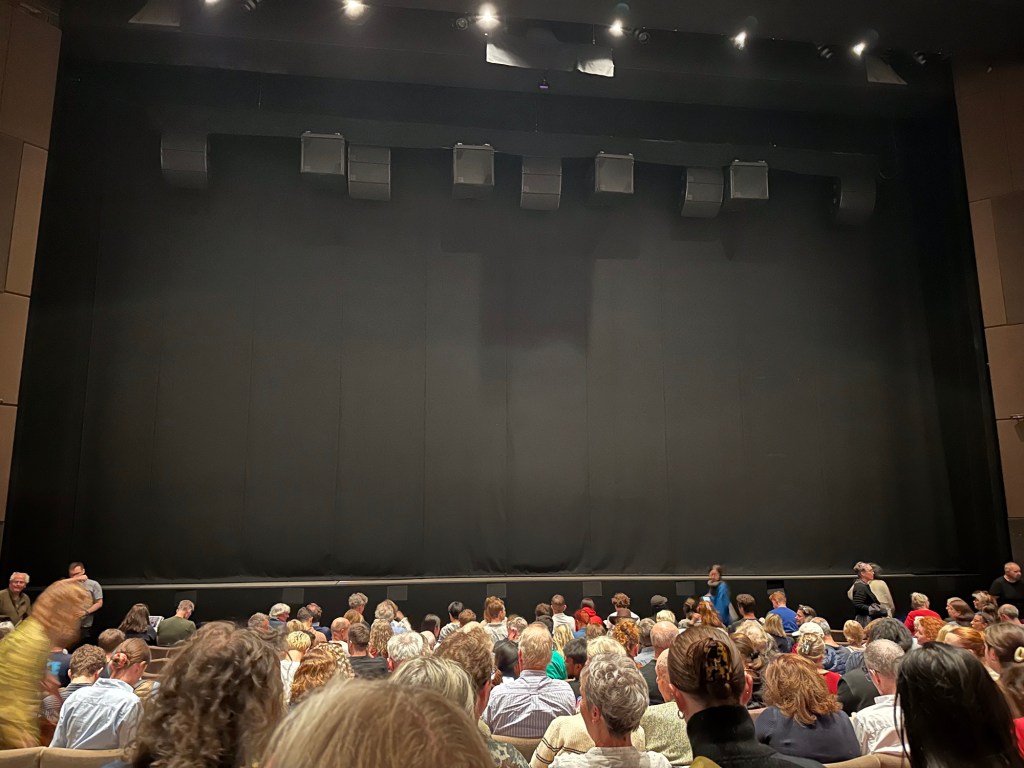
The show had a scheduled start of 19:00 and at two hours and fifty minutes long the adjusted start time was greatly appreciated for the commute home. This is part of the new initiative the NT has started trialing with earlier starts. I was surprised to see that everyone was successfully in their seats by 19:00 and the show promptly started around five past with no latecomers within the stall seating area. I think the jury is still out on this early start time, however it is a thumbs up from me. Even if it does reduce the time in the foyle room (Pateron only members bar) at the NT.
Before I start talking about the show in detail, which will contain some level of spoilers. The show is a Frank Galati adaption of John Steinbeck 1939 novel directed by Carrie Cracknell.
Now for the show itself, like all shows especially at the NT I booked it not knowing anything about it apart from some of the cast members, I was not aware of the orginal 1939 Steinbeck novel. The show opens to some classic NT staging and “wind acting”…. Some of the cast caught in an atrocious storm which really did look like the stage was being blown sideways. This depicted the storms raging and ruining the crops of the south and Midwest of the early 1930’s when this play is set. It moves onto the introduction of Tom Joad portrayed by Harry Treadaway who for me was the star of the very large and talented cast. We quickly learn that Tom is returning home from prison in which he has served 4 years. After a reintroduction to the local ex-preacher we are quickly introduced to the rest of the family which consist of 11 other members. Made up of a vast array of characters including grandpa (a personal favourite character of mine during the first act) and the mum being portrayed by the very talented and multiple award winning (Tony and Emmy) Cherry Jones. A particular character who I didn’t feel had the opportunity to really show Cherry Jones ability, as she quickly faded into just one of the 12 family members.
With the help of the on stage “Band” made up of a guitarist , violin/fiddle, steel guitar and the lead vocalist, singer song writer Maimuna Memon we are moved from scene to scene. This band not only provided a great replacement of a background sound track for each scene change. The lead singer of Maimuna was brilliant. So brilliant the NT have released a prerecord of one of the songs. You can listen to it here to get an idea of where I am coming from:
At many points throughout the show especially in the second half this band was able to provide the atmosphere needed to really take you to the time and place. For me music can add this third dimension that really brings something else to the table. It initially gave me a one man two guvnors vibe as having a live band providing the interlude is not a common practice within current plays and being in the NT with this style brought back one man two guvnors memories. With the great band used there who I had the privilege of hearing and meeting at the NT summer party back in 2019.
The first act charts the ups and downs of the 2000 plus mile journey from the family home to California to the east where the promise of jobs and money were on the horizon. The whole journey is depicted within many scenes though out the first act all centrally based around the one car in which all 13 members are travelling within. A very restricted set with the use of props, the main one being the full size car which was able to be manovoured about the stage with the brilliant use of lighting to really make the audience feel they were on the journey with them. The toughness of the journey being shown within the loss of characters who were dying due to the conditions. During this first act we get exposed to the amazing staging which takes the whole production from a very good touring production to a real National Theatre deserving production. Suddenly graves were being created with certain areas of the stage disappearing to show the actors waist deep in the “grave”. Not only this, a “real river” well a trench within the centre of the stage with real water up to the actors chest appeared. Again providing the real illusion without the need for very grand sets of you being by the river bank with the family. The use of real fire during fire side conversations also continued to add to this authentic feel which was being created, most of the time on a fairly bland and empty stage. At one point the rain curtain along the front of the stage resulted in no need for sound effects, the audience could just empraise the waterfall cascading at the front of the Lyttelton stage. Along with this and the amazing lighting design the lack of set really did not matter. The use of touches and headlines searching across the audience only added to to this authentic view and experience. Act one ends with the success of the remaining family making it to California.
We quickly learn with the opening of act two that the grass is maybe not greener on the other side. As we are presented with a stage full of tents and the sudden realisation that the jobs promised require no where near the the amount of people who have travelled from all across the south and midwest to furfil them. It was during this campsite scene where you really see the small details that make an NT production stand out from the rest. Including the small non existent bumps in the road of the car during act one to the small about of smoke appearing from a tent fire not even visible by the audience. During a very heated argument with someone who is promising work however seems to be supported by a very corrupt police force. The preacher is removed from the group and the campsite is brought down right in front of the audience eyes. Another amazing detail, instead of using a set piece to move off stage. The cast can be seen dissembling the tents in front of your eyes. Another way to provide the audience with authenticity and emotion that was going through these individuals who had to move camp before it was burnt down. The progression onto the other scenes in which jobs are promised along with a good wage. We quickly learn that there are others outside of the brilliant choreographed fence movement. Again no major set just a very well directed use of large props. It is these others including the preacher from act one who we suddenly discover are attempting to complete a “Stike” in order to increase the limited wages. Reading the NT programme for this production as usual gives you a great insight into this time and the history and politics which was occurring during this time. The show comes to a close with a very emotive conclusion of a miscarried mother attempting to save the life of an adult man who as described by his son is dying of starvation. The delayed applause that occurred within the Lyttelton really did highlight how emotive the final scene was and how the whole play was playing on the audience emotion with its true authenticity. Eventually as expected the auditorium erupted into a well deserved applause.
The show closes at the NT on the 14th September and I don’t believe it has been recorded for NT live so if you haven’t seen it unfortunately you may have missed out. But I hope this review gave you some insight into it.
Overall I give the show 3.5 stars out of 5. A very authentic insightful view of the struggles of the south and Midwest in 1930s. Showing the hope and bond that a family can have. With the NT production value adding that something extra to a John Steinbeck Adaptation.

 A SPURDLE reviews