
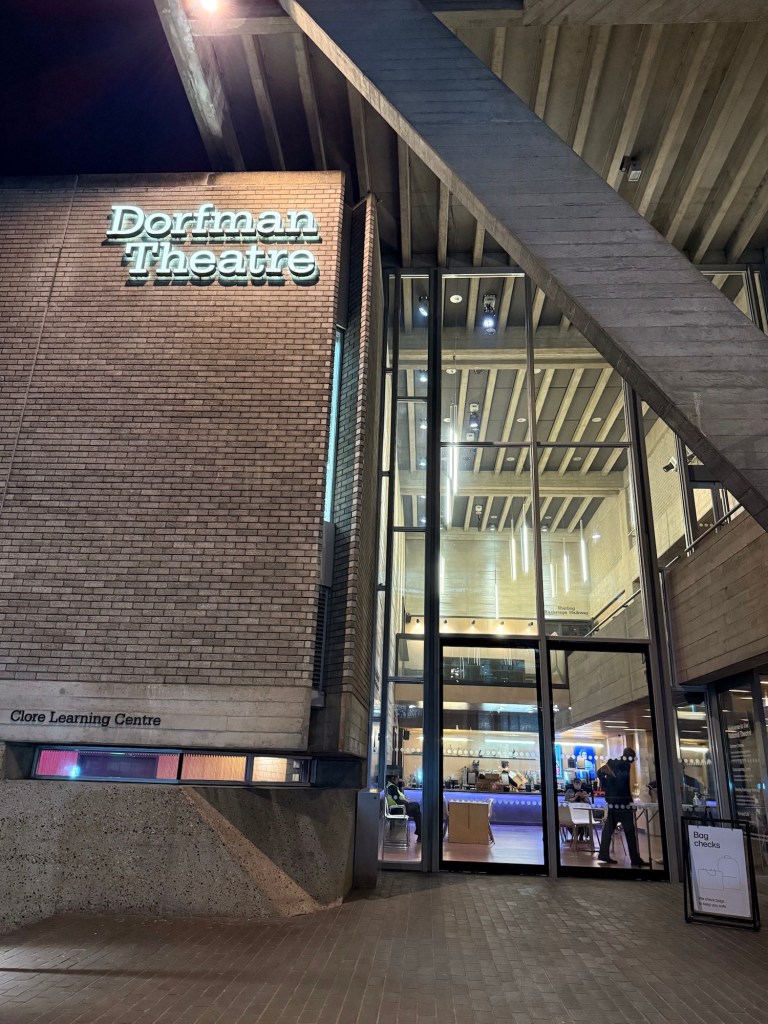
My next show takes me back to the NT and to my favourite stage of not only the NT but London as a whole the Dorfman theatre. This time to see “A Tupperware of Ashes”. Which is the last show to be staged at the Dorfman before its closes for a few months. In order to complete what I have been reassured by senior NT staff as boring but very important work.
This show opened on 25th September 2024 and closed on 16th November 2024. It is written by Tanika Gupta and directed by Poona Ghai. I managed to grab a last minute ticket the day before show closure. Hence the seat in the circle of dorfman. However as is the beauty of the Dofrman there is no bad seat and this last minute seat confirmed it. The production had varies start times throughout its run however this particular show had the more traditional start time of 19:30.
The show depicts the whole “life cycle” of an Alzheimer’s patient. From the initial suspicion, to full diagnosis and throughout the reality of trying to care and support someone with this disease. While ending with the inevitable conclusion of death. This story is centred around a Indian family and their mother “Queenie” (Meera Syal) the Alzheimer’s patient/sufferer and her three children, oldest son Raj (Raj Bajaj), his younger bother Gopal (Marc Elliott) and their doctor sister Kamala (Natalie Drew). With auntie Indrani (Shona Gulati) and Queenie long dead husband Ameet (Zubin Varla). With the rest of the characters being portrayed by Stephen Fewell and Avita Joy but more on them later.
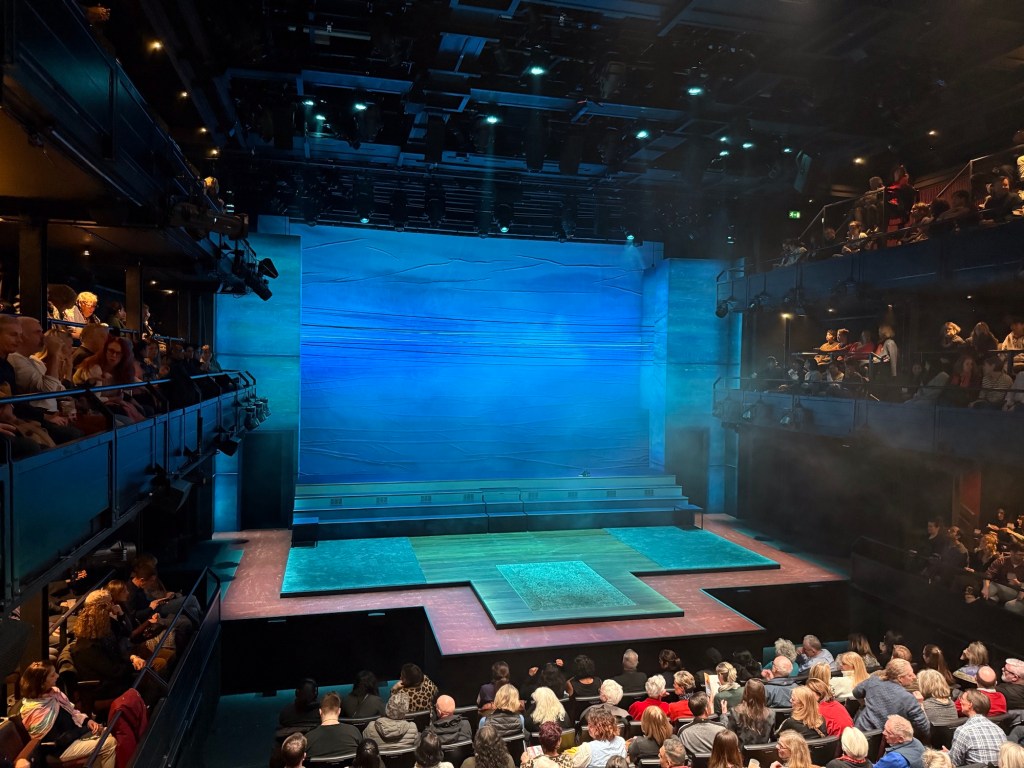
The set was very static however was initially and remained more traditional theatre staging. This is not the normal scene within the Dorfman however the very large set jutting into the audience and first front rows of the Dorfman pit auditorium was utlerised very well. The set main feature as seen in the image above is a very long large set of steps. Which was used very well throughout the show. Mainly for characters especially the dead husband of Ameet to appear from behind. Especially at the start and end of the show these steps cascading into the rear centre stage replicated the banks of a river in which Queenie initially was frolicking with Ameet to the ending in which her ashes were scattered from the Tupperware container.
Although not spectacular set the prop usage was brilliant. Firstly from the table which seemlessly appeared from the center stage steps. The props were used to depict the different scenes through the shows with this one table being varying representative from a doctors consultation table, to the family dining table to the visa operators desk. It was not only the use of this and other props throughout the show which were very impressive. The use of also magic/sleight of hand and stage trickery at different parts of the stage took myself by surprise. There was multiple occasions where this stage trickery was used to highlight/simluate the confusion occurring in Queenie mind. This includes Ameet sliding into a suitcase on the stage floor and disappearing, a very smooth quick change from Indrani, the sudden production/appreance of mango in Queenie hands. All this magic/ trickery was used to highlight the confusion that Queenie had and to give the audience a glimpse into her confused mind created by the Alzheimer’s desease.
It was not only the slick prop manipulation which helped the audience have a glimpse into the conufused mind of Queenie. The use of sound to muffle the supporting cast voice during some scenes, was used very effective. It really did let us feel like we were seeing the scene from Queenies perspective. The use of sound effects to replicate the sound of water and the ocean was used very effectly at the start and conclusion of the play. This use of perfect sound timings meant that the actors were able to “splash” the water around. As well as tap on the glass/window that separated the family and Queenie during COVID.
Not only the sound but the lighting also helped draw the audience into the state of confusion that gradually increase and become more common throughout the play. The use of light to flick between current real time and Queenie memory’s and story’s/interactions with her dead husband. This flick in lighting was subtle but effect to help provide that glimpse into Queenie point of view and outlook to life and the “real world” as she was seeing and experiencing it.
The whole show was very well written with comedic aspects at comedy the start and throughout. While also showing the real symptoms and side effects of Alzheimer’s and how it affects not only the patient but their supporting family around them. The events that occurred were a realistic glimpse into the harsh reality of such common but hugely effecting illness of Alzheimer’s. Many scenes depicting real symptoms from the illness that I have heard and experienced first hand from sufferers of Alzheimer’s. This ranged from the not eating, to not remember who you are, to aggression to totally alienation of the real world. Being able to write the whole “cycle” of the disease provided a a real hard hitting insight into not only the patients view point but the family who are trying to support and look after the individual.
The costume design was simple and effective to portray a real life family dynamic of Indian culture.
Meera Syal performance was outstanding. The ability to depict the gradual decline as the Alzheimer’s took hold was brilliantly done. From the simple forgetfulness episodes of a Michelin star chief forgoing the menu to the more consuming stages of the disease and the aggression that brings all the way through the the blankness and shell of the person. All these stages were displayed perfectly and gradually revived themselves throughout the show and you could see this person deteriorate in front of your eyes. Anyone who has dealt with any dementia type illness will recognise and appreciate how well Meera Syal portrays this characteristic do not have enough praise for Meera’s performance. You have to catch this show on NT @ home if it becomes available just for this performance alone.
The three actors of Raj Bajaj, Marc Elliott and Natalie Drew portrayal of the three quarrelling siblings was a perfect reflection of a family dynamic. Especially one having to deal with such a difficult and effecting disease. Each of then able to highlight the day to day practicality struggle that exists when having to attempt to care for a loved one with such illness. Including the internal turmoil of having to make that eventual call to put their loved one into a care home for their own safety. The reality and hard hitting nature of this production is only enhanced by these three actors performances.
I was expecting the show to be more based around the Indian cluture however it did not concentrate in to much detail on the culture or background. With a few scenes and costume design to remind you of the culture expection that comes from India. The start of the second act and the conclusion scenes and the reason for the Tupperware transport gave a great insight into the cultural need around the family. The main driving force of the whole show was not around the culture but the impact that this type of illness has on the individual and family regardless of your background or success.
Apart from the main family members Stephen Fewell portrayed many of the supporting characters which were critical at each stage of the show. Each character Stephen played was totally different from each other. They ranged from the expert doctor providing the diagnosis to the foreign care home worker. Each one totally believable and without his brilliant performance the show would not be the same.
Further information can be found on the NT website for this show and I hope to see it appear on the NT at home platform.
Overall it’s a real tear jerker especially if you have had any first hand experience of Alzheimer’s or any other debilitating type illnesses. Overall 4 stars out of 5, an unapologetic glimpse into the life and support needed for an Alzheimer’s patient. A whole “Life cycle” of the disease and the impact it has on the patient and the family’s trying to support them.

 A SPURDLE reviews